
Cloud On-Premise Contact Centers: What 2026 Demands

Scale Your Asterisk Contact Center, Cloud On-Premise Contact Centers

Facebook Teaser Post

Writing

Is your contact center ready for 2026?

The debate around cloud vs. on-premise contact centers is shaping the future of customer service. Businesses must balance scalability, flexibility, and security while meeting rising customer expectations.

Learn what contact centers will demand in 2026 and how the right technology can transform your operations.

Read the full blog to discover more.
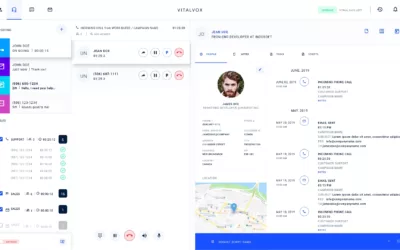
Customer service technology is evolving rapidly, and businesses are feeling increasing pressure to adapt. Cloud on-premise contact centers have therefore become a central conversation for organizations deciding how to deliver fast, reliable, and scalable support in 2026. As customer expectations continue to rise, contact center leaders must carefully evaluate which approach best supports their business goals.

At the same time, organizations must manage operational costs, maintain security, and support remote or hybrid work environments. Consequently, the infrastructure behind a contact center plays a major role in determining long-term success. While both deployment models offer advantages, the real challenge lies in choosing the solution that keeps operations agile, secure, and easy to manage.

Why Cloud On-Premise Contact Centers Matter in 2026

Customer expectations have shifted dramatically in recent years. Today, customers expect fast responses, seamless communication, and consistent experiences across every channel. As a result, contact centers must operate with greater efficiency than ever before.

Furthermore, organizations must handle increasing interaction volumes while maintaining service quality. At the same time, they must ensure that their technology supports remote teams and evolving business needs.

Because of these pressures, businesses are reassessing their infrastructure choices. Instead of relying on outdated systems, they are exploring whether cloud, on-premise, or hybrid environments can better support future growth.

The Real Challenges Businesses Face

Many contact centers still rely on legacy systems designed for a different era of customer service. Unfortunately, these systems often create operational friction that slows teams down and frustrates customers.

Limited Scalability

Traditional infrastructure can struggle when interaction volumes suddenly increase. For example, seasonal spikes or unexpected service demands can quickly overwhelm existing systems.

Consequently, businesses may experience longer wait times and reduced service quality. In contrast, modern platforms allow organizations to scale operations more efficiently.

High Infrastructure Maintenance

On-premise environments often require continuous monitoring, updates, and hardware maintenance. As a result, IT teams spend significant time managing infrastructure rather than focusing on strategic improvements.

Moreover, maintaining aging equipment can increase operational costs over time.

Remote Workforce Limitations

Since remote and hybrid work models have become standard, many legacy systems cannot easily support distributed agents. Therefore, contact centers may struggle to recruit talent outside their physical location.

In addition, limited remote capabilities can reduce workforce flexibility and business resilience.

Cloud On-Premise Contact Centers: Understanding the Differences

To make the right decision, businesses must understand how each deployment model supports operational goals.

Cloud Contact Centers

Cloud-based solutions provide flexibility, rapid deployment, and easier scalability. For instance, businesses can add new agents or communication channels without installing additional hardware.

Furthermore, cloud environments naturally support remote work. As a result, organizations can build distributed teams while maintaining service continuity.

On-Premise Contact Centers

On-premise systems provide greater direct control over infrastructure and data management. Therefore, organizations with strict regulatory requirements may still prefer this approach.

However, these systems typically require higher upfront investment and ongoing maintenance. Additionally, scaling capacity often requires additional infrastructure upgrades.

Why Hybrid Flexibility Is Becoming the Smart Strategy

Increasingly, organizations are not choosing strictly between cloud or on-premise models. Instead, many contact centers are adopting hybrid environments that combine the advantages of both approaches.

For example, businesses may maintain secure internal systems while adding cloud-powered features such as advanced routing, reporting tools, and remote agent capabilities.

As a result, hybrid strategies allow organizations to modernize gradually without disrupting existing operations. At the same time, they provide the flexibility required to respond quickly to changing customer expectations.

How Modern Contact Center Platforms Solve These Challenges

Forward-thinking organizations are investing in platforms that support both current operational needs and future growth. Rather than forcing businesses into a single infrastructure model, modern platforms provide flexible deployment options.

Indosoft helps contact centers modernize their operations by delivering solutions that simplify daily workflows and improve agent productivity. In addition, these solutions allow organizations to manage customer interactions more efficiently across multiple channels.

Most importantly, Indosoft focuses on providing technology that is powerful yet practical. As a result, businesses can implement solutions that grow alongside their operations while avoiding unnecessary complexity.

If your organization is evaluating infrastructure strategies for the future, now is the ideal time to explore solutions designed for long-term adaptability and improved customer experience.

Preparing Your Contact Center for the Future

Looking ahead, the next generation of customer service will demand agility, reliability, and operational visibility. Therefore, contact centers must move beyond outdated systems that limit growth and responsiveness.

By adopting modern platforms, organizations can:

  • Scale operations quickly during demand spikes
  • Support remote and hybrid agent teams
  • Improve response times and customer satisfaction
  • Reduce infrastructure maintenance burdens
  • Deliver consistent omnichannel customer experiences

Ultimately, organizations that invest in flexible contact center technology today will be better prepared to meet the demands of tomorrow.

Indosoft’s Q-Suite NG platform empowers businesses with a powerful solution designed to support both cloud and on-premise environments. By simplifying contact center operations and improving agent productivity, Q-Suite NG helps organizations deliver consistent customer experiences. At the same time, its scalable architecture allows businesses to adapt as customer service demands continue to evolve.

Contact Us

Ready to future-proof your contact center?

Discover how Indosoft can help your organization navigate the evolving landscape of Cloud On-Premise Contact Centers while building a smarter and more adaptable customer service operation.

Contact Indosoft today to learn more about our solutions or request a personalized demo.

Frequently Asked Questions (FAQs)

What is the difference between cloud and on-premise contact centers?
Cloud contact centers operate through hosted infrastructure that allows remote access and flexible scaling. In contrast, on-premise systems rely on internal hardware managed by an organization’s IT team.

Are cloud contact centers easier to scale?
Yes. Cloud environments allow organizations to quickly add agents, communication channels, and features without installing additional physical infrastructure.

Why do some companies still use on-premise contact centers?
Some organizations prefer on-premise systems because they provide direct control over infrastructure, data management, and compliance requirements.

What is a hybrid contact center model?
A hybrid model combines cloud capabilities with on-premise infrastructure. As a result, businesses gain flexibility while maintaining control over critical systems.

How can modern platforms improve contact center performance?
Modern platforms improve performance by providing intelligent routing, analytics, omnichannel communication, and tools that support remote teams.

How does Q-Suite NG support modern contact centers?
Q-Suite NG helps organizations streamline operations, improve agent efficiency, and adapt to changing customer service demands with a flexible and scalable platform.

Book a Free Demo

Fill in the form below for a free consultation.